


What Is an Investment Property Loan?
An investment property loan helps you buy or refinance real estate held for rental income, future appreciation, or both. You do not live in the property as your primary residence.
Lenders generally view investment properties as higher risk. Their requirements may differ from those for a primary residence.
How Do Investment Property Loans Work?
The basic loan process is similar to other mortgages. The lender reviews both your finances and the property.
Depending on the program, the lender may review:
- Credit history and monthly debts
- Income and eligible rental income
- Down payment, available assets and cash reserves
- Property type
What Qualifies as an Investment Property?
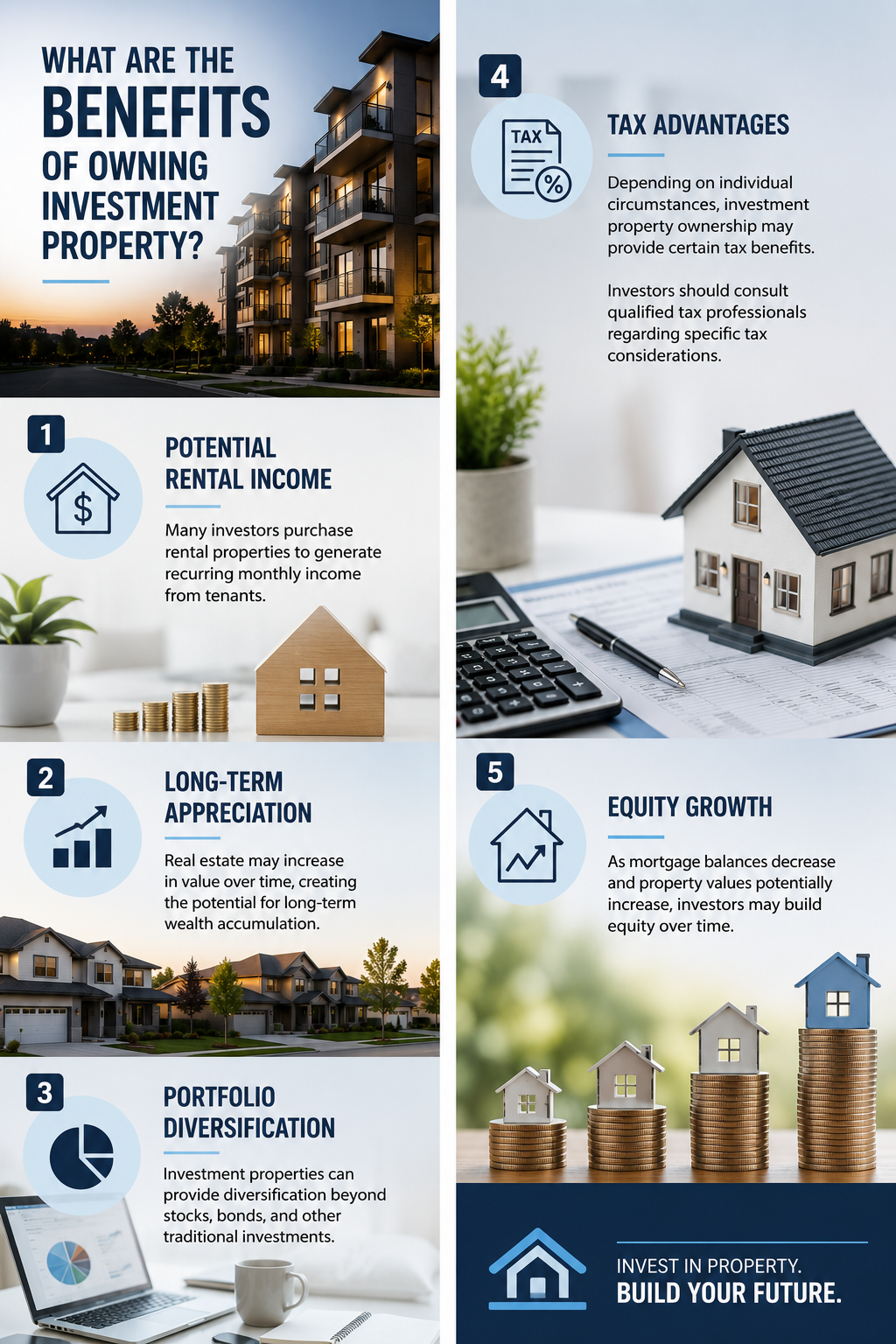
An investment property is real estate purchased primarily to generate rental income, future appreciation, or both.
Examples include:
- Long-term rental properties
- Short-term vacation rentals, subject to program and property requirements
- Multifamily investment properties
- Real estate purchased for income production
Second home or investment property? A second home and an investment property are not the same occupancy category. Personal use and rental plans affect how the lender classifies the home. That classification affects which programs are available. You must accurately disclose how you intend to use the property.
Properties occupied by the borrower as their primary residence generally do not qualify as investment properties.
What Types of Investment Property Loans Are Available?
Several financing options may be available depending on the property and borrower qualifications.
Conventional Investment Property Loans
Conventional financing is one of the most common options for purchasing investment properties.
Benefits may include:
- Fixed-rate and adjustable-rate options
- Various loan terms
- Financing for single-family and multifamily properties
- Terms and pricing based on the borrower, property and loan program.
Conventional vs. DSCR Investment Property Financing
Conventional financing reviews your qualifying income, debts, assets and credit. Eligible rental income may also count.
A debt service coverage ratio (DSCR) program focuses more on the property’s eligible rent compared with its qualifying housing expense. Lender requirements still apply. Rental income alone does not guarantee approval.
When I compare these approaches with an investor, I start with three things:
- The proposed down payment
- Income from sources outside the property
- The investor’s experience
Then we review the documents, estimated total costs, cash reserves and loan terms, including any prepayment provisions. The choice depends on both the investor and the property.
Jumbo Investment Property Loans
Higher-value investment properties may require jumbo financing when loan amounts exceed conforming loan limits.
Cash-Out Refinance Loans
Investors may use a cash-out refinance to access equity from existing investment properties, subject to qualification requirements.
How Much Down Payment Is Required for an Investment Property?
Investment property loans often require larger down payments than owner-occupied home loans.
The exact amount depends on:
- Property type
- Number of units
- Loan program
- Credit profile
- Occupancy classification
- Overall borrower qualifications
A mortgage professional can help determine the available financing options based on your specific goals.
The down payment can also affect loan pricing, although a larger down payment does not guarantee a particular rate. Closing funds and cash reserves are separate. Some programs require proof of assets left after closing. The amount varies by program and investor profile.
Can First-Time Investors Qualify for an Investment Property Loan?
Yes.
You do not necessarily need prior investment property experience to qualify for investment property financing. Many first-time investors successfully purchase rental properties using traditional mortgage financing.
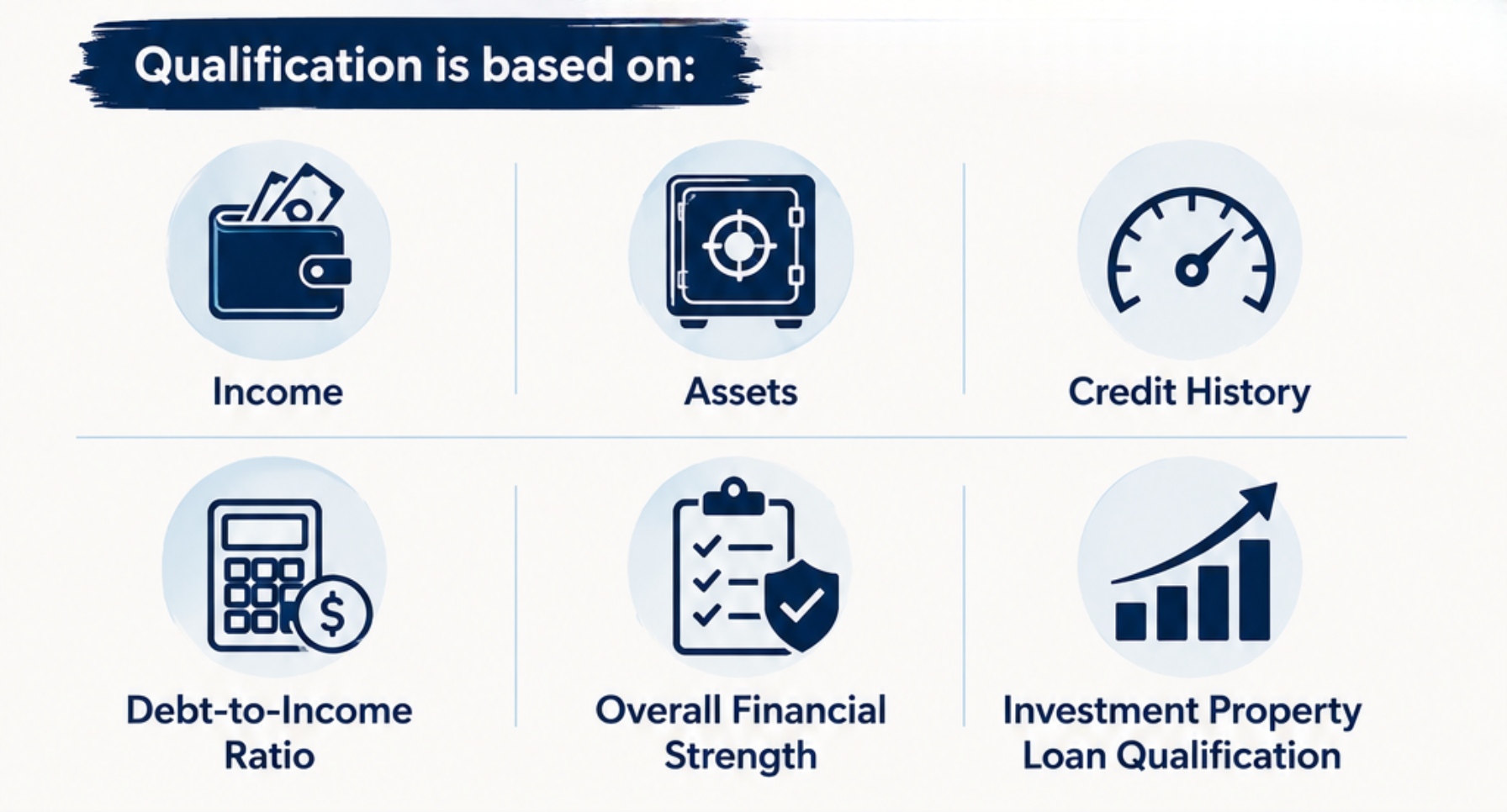
Qualification is based on factors such as income, assets, credit history, debt-to-income ratio, and overall financial strength.
Investment Property Loan vs. Primary Residence Loans
Many borrowers are surprised to learn there are important differences between financing a primary residence and financing an investment property.
Primary Residence Loans
- Borrower occupies the home
- Often offer lower down payment options
- Designed for owner-occupied properties
- May provide more flexible qualification guidelines
Investment Property Loans
- Property is not owner occupied
- Typically require larger down payments
- May have additional reserve requirements
- Underwriting standards may be more stringent
Understanding the property’s intended use is critical when selecting a loan program.
Common Investment Property Loan Questions:
It may. The amount of rent that can count toward qualification is not necessarily the full amount shown on a lease. Depending on the program and documents, lenders account for vacancy or expenses. They may also limit the income that counts based on rental history or property-management experience. Conventional loans and DSCR programs evaluate rental income differently. We can review how the proposed income would be treated instead of assuming every dollar of rent is available for qualification.
Yes. Many investors purchase duplexes, triplexes, and fourplexes using investment property financing.
Yes. Investment properties can often be refinanced to lower payments, change loan terms, or access equity through a cash-out refinance.
Yes. Qualification requirements and financing options often differ depending on whether the property is classified as an investment property or a second home.
Real estate investors throughout Oregon and Washington use investment property loans to purchase rental homes, multifamily properties, vacation rentals, and income-producing real estate.
Whether you’re purchasing your first rental property or expanding an existing portfolio, selecting the right financing strategy can have a significant impact on long-term investment performance.
At Platinum Lending Solutions, we help real estate investors throughout Oregon and Washington explore financing options for investment properties and rental real estate.
We can help you:
- Compare conventional and other available investment-property financing options.
- Review how documented income and eligible rental income may affect qualification.
- Discuss down payment, closing funds, and any cash-reserve requirements.
- Explain the documentation and steps involved in a potential pre-approval.
- Explore available refinancing options and the tradeoffs of each.
- Guide borrowers through the financing process from application to closing.
Bottom Line
An investment property loan is a mortgage used to purchase or refinance real estate that is not occupied as the borrower’s primary residence. These loans are commonly used for rental properties, multifamily homes, and other income-producing real estate investments.
