
What Is a Conventional Loan?
A conventional loan is a mortgage that is not insured or guaranteed by a government agency such as the Federal Housing Administration (FHA), Department of Veterans Affairs (VA), or U.S. Department of Agriculture (USDA). Conventional loans are one of the most popular home financing options and are commonly used by first-time homebuyers, repeat buyers, and homeowners looking to refinance.
Conventional loans typically offer competitive interest rates, flexible loan terms, and a variety of down payment options for qualified borrowers.
How Does a Conventional Loan Work?
Conventional loans are offered by private lenders and generally follow guidelines established by Fannie Mae and Freddie Mac.
Borrowers are evaluated based on factors such as:
- Credit score
- Income
- Employment history
- Assets
- Debt-to-income ratio
- Down payment amount
The specific loan terms available will depend on the borrower’s financial qualifications and the property being financed.
What Are the Benefits of a Conventional Loan?
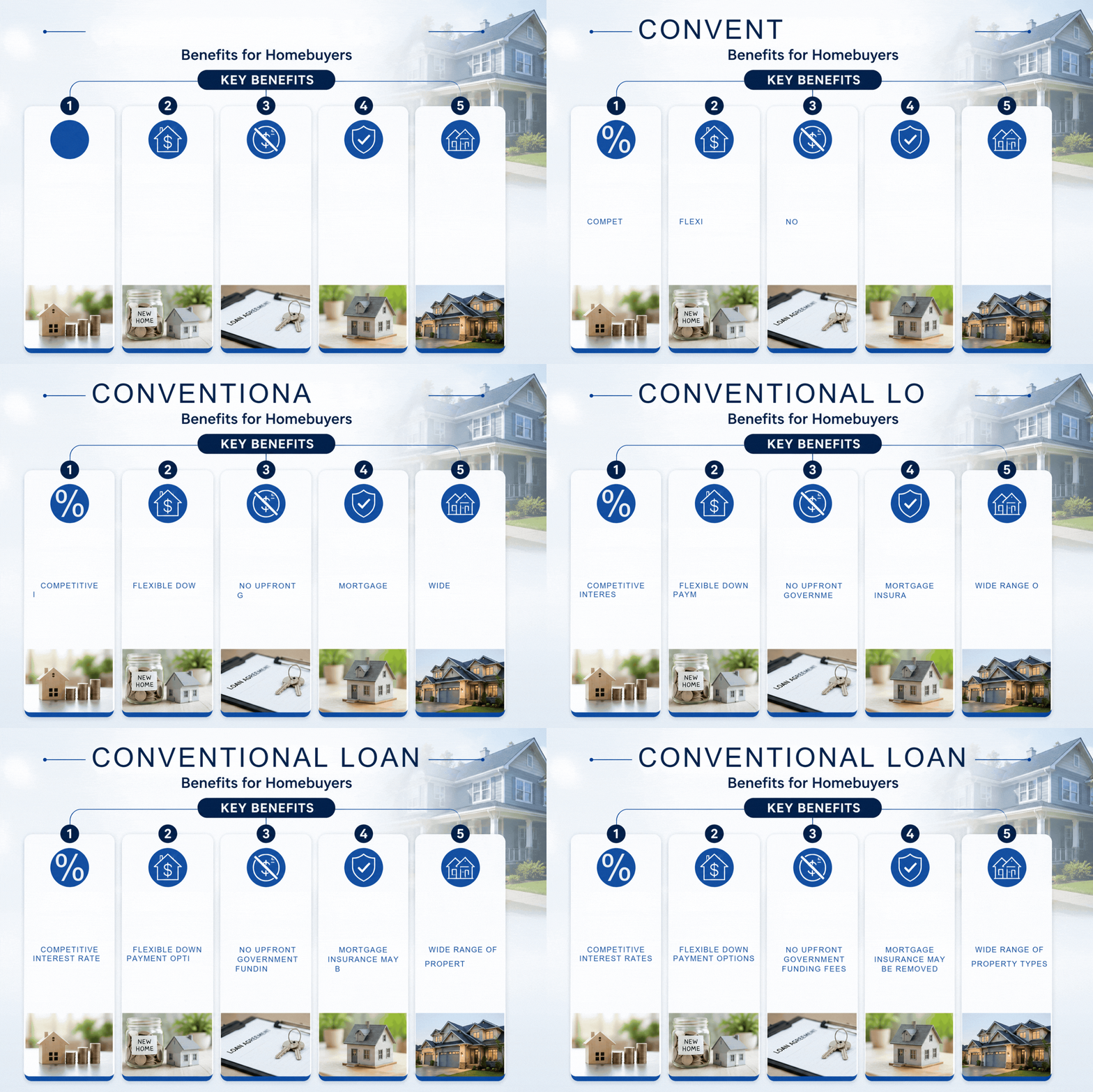
Competitive Interest Rates
Conventional loans often offer attractive interest rates for qualified borrowers, helping reduce the overall cost of homeownership.
Flexible Down Payment Options
Many homebuyers are surprised to learn that conventional loans may be available with less than a 20% down payment.
Depending on borrower qualifications and program guidelines, low down payment options may be available.
No Upfront Government Funding Fees
Unlike certain government-backed loan programs, conventional loans do not typically require an upfront funding fee.
Mortgage Insurance May Be Removed
If a conventional loan requires private mortgage insurance (PMI), eligible borrowers may be able to request its removal after meeting applicable equity, payment history, property value and loan-servicing requirements.
Wide Range of Property Types
Conventional loans may be used for:
- Primary residences
- Second homes
- Vacation homes
- Investment properties
Eligibility requirements vary based on occupancy and loan type.
Who Is a Good Candidate for a Conventional Loan?
A conventional loan may be a good fit for:
- First-time homebuyers
- Repeat homebuyers
- Borrowers with strong credit profiles
- Buyers with stable income and employment
- Homeowners looking to refinance
- Real estate investors
Every borrower’s situation is unique, so the right loan program depends on individual financial goals and qualifications.
Conventional Loan vs. FHA Loan
Many homebuyers compare conventional loans and FHA loans when exploring mortgage options. Neither loan program is automatically better for every borrower. The right option depends on your credit profile, down payment, property type, financial goals and overall qualifications.
Conventional Loans
- Not government insured
- Competitive interest rates
- Flexible down payment options
- Mortgage insurance may be removed if eligible
- Available for primary residences, second homes, and investment properties
FHA Loans
- Government insured
- Flexible credit requirements
- Lower down payment options available
- Mortgage insurance required
- Primarily designed for owner-occupied homes
Do Conventional Loans Require Mortgage Insurance?
Not always. Private mortgage insurance is generally required when a conventional borrower makes a down payment of less than 20%, although requirements vary by loan program and borrower qualifications. Eligible homeowners may be able to request PMI cancellation after meeting applicable equity and loan-servicing requirements.
How Much Down Payment Is Required for a Conventional Loan?
Down payment requirements vary based on the loan program, occupancy type, and borrower qualifications.
Many qualified home buyers can purchase a home with less than a 20% down payment, although a larger down payment may reduce monthly payments and financing costs.
Common Questions About Conventional Loans
No. While stronger credit profiles often provide access to the most favorable financing options, conventional loans are available to many qualified borrowers with a range of credit histories.
Yes. Conventional loans are one of the most common mortgage options for first-time homebuyers.
Yes. Conventional loans are frequently used for both home purchases and mortgage refinances.
Neither loan is automatically better. A suitable option depends on your credit profile, down payment, financial goals, and overall qualifications.
Conventional loans are one of the most popular financing options for homebuyers throughout Oregon and Washington. They provide flexible financing solutions for primary residences, second homes, investment properties, and refinance transactions.
Because every buyer’s financial situation is unique, comparing loan options with a mortgage professional can help you determine the right financing solution.
At Platinum Lending Solutions, we help homebuyers throughout Oregon and Washington compare conventional loans, FHA loans, VA loans, jumbo loans, and other mortgage programs.
Our goal is to help you understand your options, obtain a mortgage pre-approval, and choose the financing solution that aligns with your homeownership goals.
Bottom Line
Conventional loan requirements and available terms depend on your financial profile, down payment, property type and homeownership goals. Contact Platinum Lending Solutions to discuss conventional loan options that may be available to you in Oregon or Washington.
Reviewed by Stacy Schlesinger, President and Licensed Mortgage Broker, NMLS #252075. Updated August 2026.
