
JUMBO CONSTRUCTION FINANCING
Construction Financing for Higher-Value and Custom Homes
Building a custom or higher-value home can require financing beyond the limits and structure of standard construction loan programs.
Jumbo construction loans are designed for qualified borrowers whose construction projects require larger loan amounts. Depending on the program, financing may be available for building on land you already own, purchasing land as part of the transaction, and financing eligible costs associated with constructing the home.
Because jumbo construction programs can vary considerably between lenders, comparing the complete financing structure is particularly important.
Platinum Lending Solutions helps borrowers throughout Oregon and Washington evaluate jumbo construction financing across multiple lending sources and determine which options may fit the property, project, borrower qualifications, and longer-term mortgage strategy.
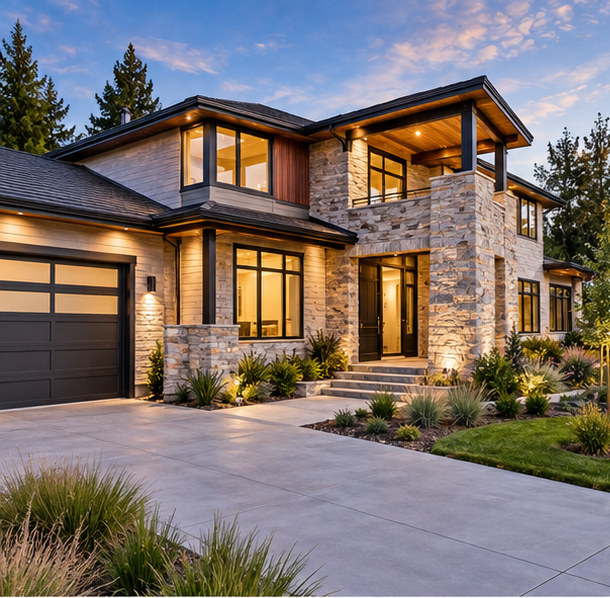
Higher-Value Custom-Home Financing
Larger construction transactions can involve additional considerations for borrower equity, liquidity, reserves, land value, builder approval, custom-home valuation, construction draws, and permanent financing.
What Is a Jumbo Construction Loan?
A jumbo construction loan provides financing for a new construction project requiring a loan amount beyond the parameters of standard conforming construction financing.
Like other construction loans, the financing must account for a home that does not yet exist in its completed form.
The lender therefore evaluates not only the borrower but also the proposed project, which may include:
• Land or building site
• Builder or general contractor
• Architectural plans and specifications
• Construction contract
• Detailed project budget
• Construction timeline
• Expected completed value
• Draw schedule
Jumbo construction financing may also involve more substantial borrower equity, liquidity, and reserve requirements depending on the lender and transaction.
When Might You Need a Jumbo Construction Loan?
Jumbo construction financing may be appropriate when the amount required to build the home exceeds the limits or parameters of available conforming construction programs.
This can occur with:
Higher-Value Custom Homes
Larger Construction Budgets
High-Cost Building Locations
Properties With Significant Land Value
Larger or More Complex Custom-Home Projects
Construction Requiring a Larger Permanent Mortgage
The price of the land alone does not determine whether jumbo financing is required.
The land, total project cost, proposed loan amount, expected completed value, borrower contribution, and permanent financing structure all need to be considered together.

Building on Land You Already Own
Many custom-home borrowers purchase or own their building site before construction financing is arranged.
If you already own the land, its value and any available equity may play an important role in structuring the construction loan.
The lender will generally evaluate:
• Current land value
• How and when the land was acquired
• Existing liens, if any
• Proposed construction
• Total project cost
• Expected completed value
Depending on the program and transaction, existing land equity may potentially contribute toward the borrower’s required investment.
How that equity is calculated and treated varies by lender, making it important to evaluate the land as part of the financing before determining how much additional cash will be required.
Can You Finance the Land and Construction Together?
Potentially.
Certain jumbo construction programs may allow qualified borrowers to purchase the building site and finance construction as part of the same overall transaction.
Program requirements can differ substantially, so borrowers considering a land purchase should explore the construction financing before completing the acquisition whenever possible.
Doing so can help establish whether the proposed land, construction budget, borrower contribution, and overall project fit within available financing options.
How Jumbo Construction Financing Works
Although the specific process varies by lender and program, jumbo construction financing generally involves several stages.
01
Borrower Qualification
The lender evaluates the borrower’s overall financial profile.
Depending on the program, this may include:
• Income and employment
• Credit
• Assets
• Existing obligations
• Available funds
• Liquidity
• Reserves
• Other real estate owned
Because larger construction projects can involve significant financial commitments and potential cost changes during construction, liquidity and reserves may receive particular attention.
02
Project Review
The lender evaluates what is being built and whether the proposed project meets its construction lending requirements.
This may include the plans, specifications, construction contract, builder, budget, timeline, and property.
03
Appraisal
The property may be appraised based on its expected completed condition, subject to the requirements of the applicable program.
04
Closing
Once the borrower, property, builder, and project satisfy the applicable requirements, the construction financing closes.
05
Construction Draws
Funds allocated for construction are generally released in stages as work progresses and applicable draw requirements are satisfied.
06
Completion and Permanent Financing
Once construction is complete, the next step depends on whether the financing was structured as construction-only or construction-to-permanent financing.
Jumbo Construction-to-Permanent Loans
Jumbo construction financing may potentially be structured as construction-to-permanent financing.
A construction-to-permanent structure combines the construction phase and permanent mortgage within one overall loan structure.
For a higher-value custom home, this can be an important consideration because the borrower is not only selecting financing for the construction period — they are also making decisions about a potentially substantial long-term mortgage.
Alternatively, some borrowers may use construction-only financing and arrange separate permanent financing when the home is completed.
Neither structure is automatically better.
The construction terms, permanent mortgage terms, costs, rate structure, lock provisions, flexibility, and borrower’s longer-term strategy should be evaluated together.
Explore Construction-to-Permanent Loans →
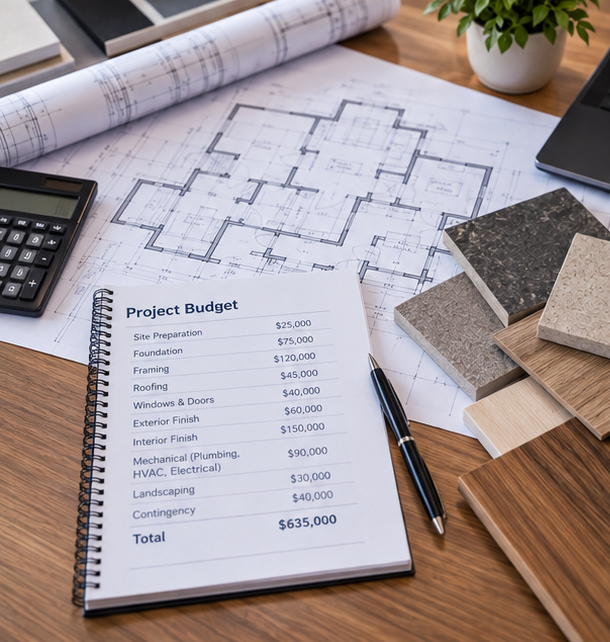
Down Payment and Equity Requirements
There is no single down payment requirement for every jumbo construction loan.
Required borrower equity can vary based on factors including:
• Loan amount
• Total project cost
• Land value
• Existing land equity
• Expected completed value
• Borrower qualifications
• Liquidity and reserves
• Property characteristics
• Loan structure
• Lender requirements
For borrowers who already own valuable land, available equity may affect the amount of additional cash required.
Because jumbo programs can approach equity differently, it is important to evaluate actual financing options rather than assuming the requirements will be the same from one lender to another.
Liquidity and Reserve Requirements
Larger construction projects can require borrowers to demonstrate substantial financial resources beyond the funds needed at closing.
Depending on the program, the lender may require reserves or other available liquidity.
These requirements can be particularly important with custom construction because project costs and timelines can change.
A borrower who appears well qualified based on income and credit alone may find that liquidity or reserve requirements become an important factor in determining which jumbo construction programs are available.
For that reason, the entire financial profile should be reviewed early in the planning process.
Builder Approval
The builder is an important component of jumbo construction financing.
Lenders may establish specific requirements for the builder or general contractor and may review documentation relating to experience, licensing, insurance, financial qualifications, prior projects, contracts, or other factors.
The exact approval process varies by lender.
Builder requirements should be considered before the construction financing is finalized — particularly with a highly customized or complex project.
Selecting a builder without first understanding potential lender requirements can unnecessarily limit the financing options available later.
Plans, Specifications, and Construction Budget
Jumbo construction lenders generally need a detailed understanding of what is being built and what the project is expected to cost.
Documentation may include:
• Architectural plans
• Specifications
• Construction contract
• Detailed cost breakdown
• Labor and material estimates
• Allowances
• Construction timeline
• Project contingencies
The more complex the project, the more important it becomes for the construction plans, contract, budget, appraisal, and financing to align.
Significant changes to the project after financing has been approved may also affect the loan and should be addressed with the lender before changes are made.

How Is a Jumbo Construction Home Appraised?
A custom home under construction cannot be evaluated in the same manner as an already completed property.
Depending on the program, the appraisal may consider the expected completed property based on the building site, plans, specifications, proposed improvements, and applicable market data.
Highly customized homes can present additional valuation considerations because there may be fewer directly comparable completed properties.
The completed appraised value can be an important part of determining the final financing structure, particularly when the project cost and requested loan amount are substantial.
How Are Construction Funds Released?
Jumbo construction funds are typically distributed through a draw process rather than being fully disbursed when the loan closes.
As designated stages of construction are completed, funds may be requested and released according to the lender’s procedures.
Depending on the program, this may involve:
01
Completion of a designated construction stage
02
Submission of a draw request
03
Inspection or verification of completed work
04
Satisfaction of applicable draw requirements
05
Release of approved construction funds
The draw schedule should be understood by both the borrower and builder before construction begins.
For a large custom-home project, draw timing and procedures can be particularly important because substantial amounts of money may need to move through the project at different stages.
Interest Rates and Rate-Lock Considerations
Rate structures can vary significantly among jumbo construction programs.
Depending on the loan, there may be different provisions governing the construction period, permanent financing, and when or how a permanent mortgage rate can be established.
Construction can take many months, making rate-lock provisions and the eventual permanent financing particularly important considerations.
A borrower should therefore evaluate more than the initial construction rate.
The complete financing structure — including costs, construction terms, permanent mortgage terms, and rate provisions — should be compared when selecting a program.
Why Comparing Jumbo Construction Lenders Matters
Jumbo construction lending is not necessarily standardized from one lender to another.
Different lenders may have different approaches to:
• Maximum loan amounts
• Required borrower equity
• Treatment of land equity
• Liquidity and reserves
• Builder approval
• Property characteristics
• Construction budgets
• Draw procedures
• Construction timelines
• Rate structures
• Permanent financing
• Closing requirements
A project that does not fit one lender’s construction program may potentially fit another lender differently.
This is where working with an independent mortgage brokerage can be particularly useful.
Rather than beginning with the requirements of one institution, Platinum Lending Solutions can evaluate the project across multiple lending sources and compare the structures available for the specific transaction.
Jumbo Construction Loans vs. Standard Construction Loans
Both standard and jumbo construction financing can be used to build a new home, and both may involve project approval, builder requirements, appraisals, budgets, inspections, and construction draws.
The primary distinction is the size and structure of the financing required.
Higher loan amounts and larger custom projects may also result in different requirements for borrower equity, reserves, liquidity, property valuation, and permanent financing.
If your project does not require jumbo financing, Explore New Construction Loans →
Start With Financing Before Finalizing a High-Value Build
With a large custom-home project, financing should be evaluated early.
Before purchasing land or finalizing construction plans, understanding the available financing can help establish:
• Realistic total project financing
• Potential cash and equity requirements
• Treatment of land equity
• Liquidity and reserve requirements
• Builder requirements
• Construction budget parameters
• Draw procedures
• Construction-to-permanent options
• Permanent mortgage considerations
• Rate and lock provisions
Early financing review can also identify potential limitations while there is still flexibility to adjust the land acquisition, project budget, financing structure, or other aspects of the transaction.
Jumbo Construction Loans in Oregon & Washington
Higher-value construction projects can vary considerably based on location, land characteristics, property design, construction costs, builder, loan amount, and borrower financial profile.
As an independent mortgage brokerage serving Oregon and Washington, Platinum Lending Solutions can evaluate jumbo construction financing through multiple lending sources.
Our role is to help borrowers compare available programs, understand the requirements, and determine which financing structure may align with both the custom-home project and longer-term mortgage strategy.
Jumbo Construction Loan FAQs
What makes a construction loan jumbo?
A construction loan is generally considered jumbo when the financing required exceeds the parameters of available conforming construction financing. The applicable structure depends on the loan amount, program, property, and transaction.
Can I use a jumbo construction loan if I already own the land?
Potentially. Existing land and available equity may be considered when structuring certain jumbo construction loans.
Can I finance the land purchase and construction together?
Certain programs may allow qualified borrowers to acquire land and finance construction as part of the same overall transaction. Availability and requirements vary by lender.
Does my land equity count toward the down payment?
Potentially. How existing land equity is calculated and applied toward the financing depends on the lender, loan program, property, and transaction.
Do jumbo construction loans require larger reserves?
Reserve and liquidity requirements vary by program and borrower. Because jumbo construction involves larger loan amounts and potentially significant project costs, financial reserves and liquidity can be important qualification considerations.
Does the builder need to be approved?
Many jumbo construction lenders establish requirements for builders or general contractors. The approval process varies by lender and should be addressed early.
How are construction funds distributed?
Construction funds are generally released through a series of draws as designated stages of work are completed and applicable lender requirements are satisfied.
How is a custom home appraised before it is built?
Depending on the program, the appraisal may evaluate the property’s expected completed value using the land, plans, specifications, proposed improvements, and applicable market data.
Can a jumbo construction loan be a one-time-close loan?
Potentially. Some jumbo construction financing may be available using a construction-to-permanent structure. Program availability and terms vary by lender.
Can I lock my permanent mortgage rate during construction?
Possibly. Rate-lock provisions vary considerably between construction lenders and loan structures and should be evaluated when comparing programs.
Planning a Higher-Value Custom Home?
Financing a custom home involves more than determining whether you qualify for a particular loan amount.
The land, construction budget, builder, completed value, borrower equity, liquidity, construction financing, and eventual permanent mortgage all need to work together.
Platinum Lending Solutions can help you evaluate jumbo construction loan options across multiple lending sources and understand the financing requirements before you commit to the project.
Have Questions About Your Jumbo Construction Loan Options?
Tell us a little about the land, proposed home, builder, construction budget, and financing you are considering. We can help you evaluate potential jumbo construction options and determine what steps to consider next.
